


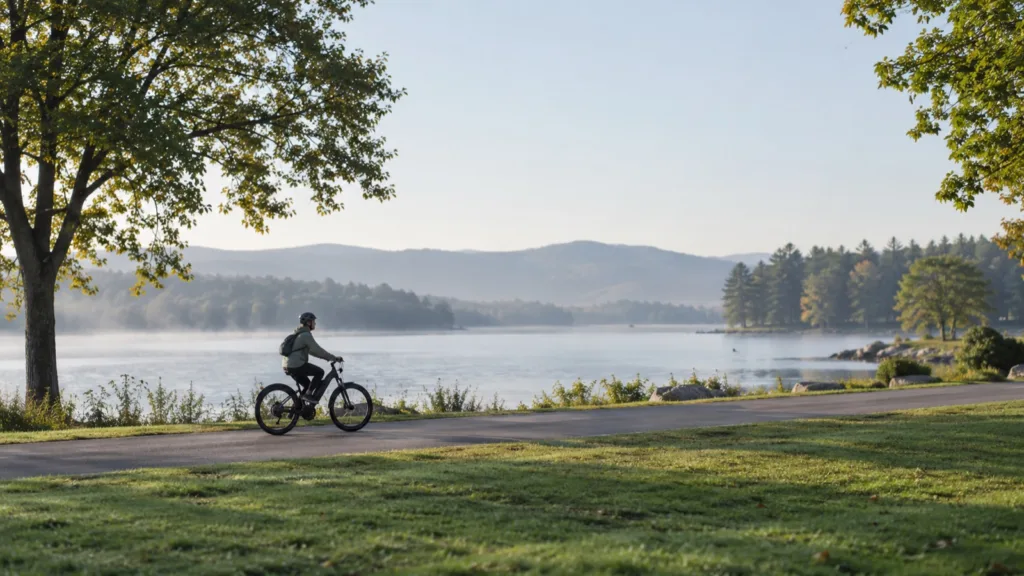
Choose an e-bike pedal assist level by the effort and control you need on the current section of your ride. Begin with a gentle setting in a clear practice area, learn how the bike responds, and add support when the route calls for it. A level number is a setting on that particular bike, not a universal speed or percentage of motor power.
The useful question is whether you can pedal comfortably and ride predictably. Picking one level for every street, hill and stop usually makes less sense than learning a few settings you can change without looking down for long.
What the assist number tells you
Pedal assist uses the motor to help while you pedal. The system decides how to respond using its sensors and programming. Some bikes use numbered levels; others use names such as Eco or Tour. REI’s e-bike buying guide describes assistance settings as a way to choose more help or conserve battery use. Your bike’s instructions explain what its settings actually do.
Do not assume level 2 on a friend’s bicycle will feel like level 2 on yours. Nor does selecting a higher level change the chain’s mechanical gear. If those controls are unfamiliar, read the pedal assist and throttle comparison before practicing.
Match support to the part of the ride
This is a practice worksheet, not a set of numbered settings for every model:
| Situation | What to try | What to notice |
|---|---|---|
| Clear, level practice area | A gentle assist setting and comfortable gear | Whether starts feel predictable |
| Open road with a headwind | A small increase if you need it | Whether you can keep a comfortable effort |
| Approaching a gentle climb | An easier gear, then suitable assistance | Whether you can keep pedaling smoothly |
| Crowded or narrow section | Less assistance and a speed you can control | Space to slow and stop |
| Returning with luggage | Reassess support after a loaded practice ride | How the added load affects handling |
Keep the controls familiar enough that you can change support while watching the route. If changing a setting distracts you, find a safe place to stop and make the adjustment there. Extra assistance cannot make an unsuitable surface or an overloaded rack suitable.
Try a short loop before judging range
Use a quiet loop with one flat section and a modest rise. First ride with a gentle setting, then repeat with a little more support if conditions allow. Keep the route, luggage and riding pace as similar as practical. Note which sections felt difficult and which setting helped.
That comparison is for learning the controls. A short loop does not measure full battery range. Weather, speed, route and load all matter, and the display’s remaining-range estimate may change during a ride. The range-planning guide explains how to use your own comparable rides when planning distance.
For a commute, a useful note might be: "Gentle assistance on the park path; more support on the bridge approach; reduce it before the busy junction." It is more informative than recording only "level 3" for the whole trip.
When assistance feels abrupt
Reduce the setting in a safe place and check that your starting gear is manageable. Practice smooth starts with the instructions for your exact bike. Different sensors can produce different responses; the torque and cadence sensor guide explains the distinction.
Unexpected surging, an error message or a change from the bike’s normal behavior deserves attention. Stop riding if you cannot control the response and ask the seller or a qualified technician to inspect it. Changing hidden controller settings is not a good substitute for finding the cause.
Common questions about assist levels
Does a higher number guarantee a particular speed? No. Read the manual for the model’s behavior, and choose your riding speed for the conditions rather than chasing the display number.
Should you stay in the lowest setting to save charge? Only if it gives you manageable effort and control for the route. Plan a shorter ride when charge is limited instead of relying on a setting you cannot comfortably use.
Can you leave assistance high when parking? Follow the shutdown instructions and switch the system off when handling the bike as directed. Learn that routine before the first crowded ride.