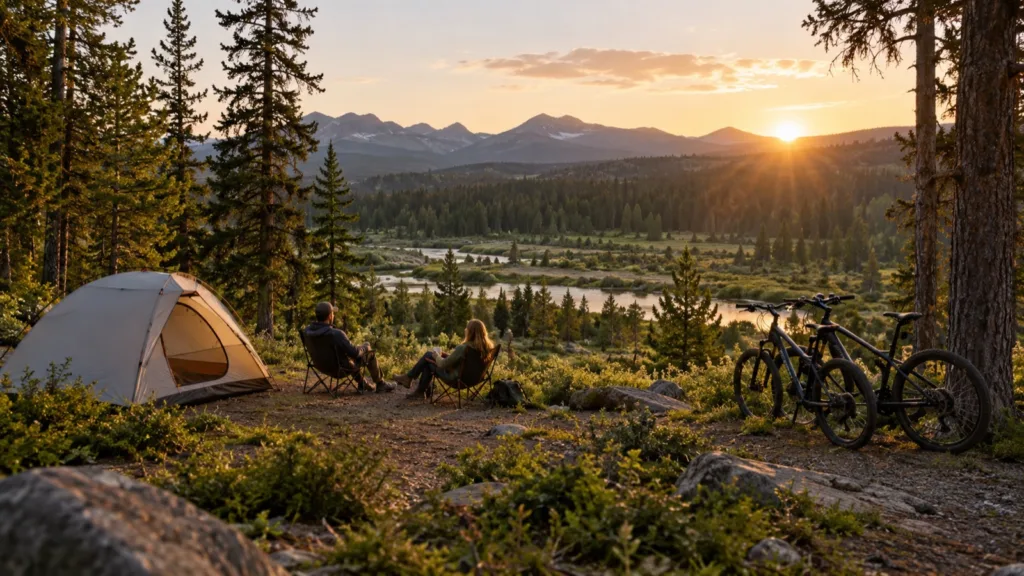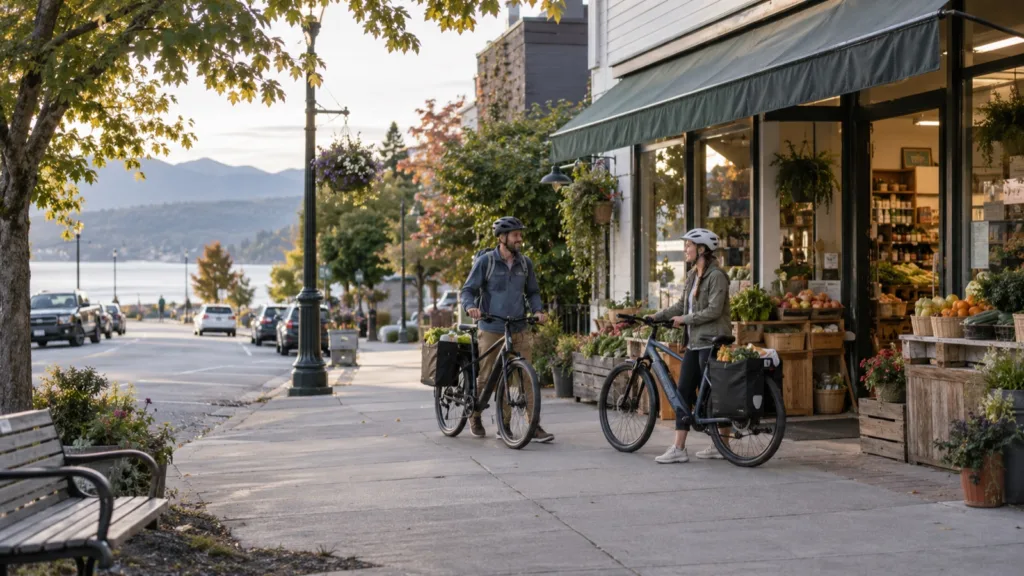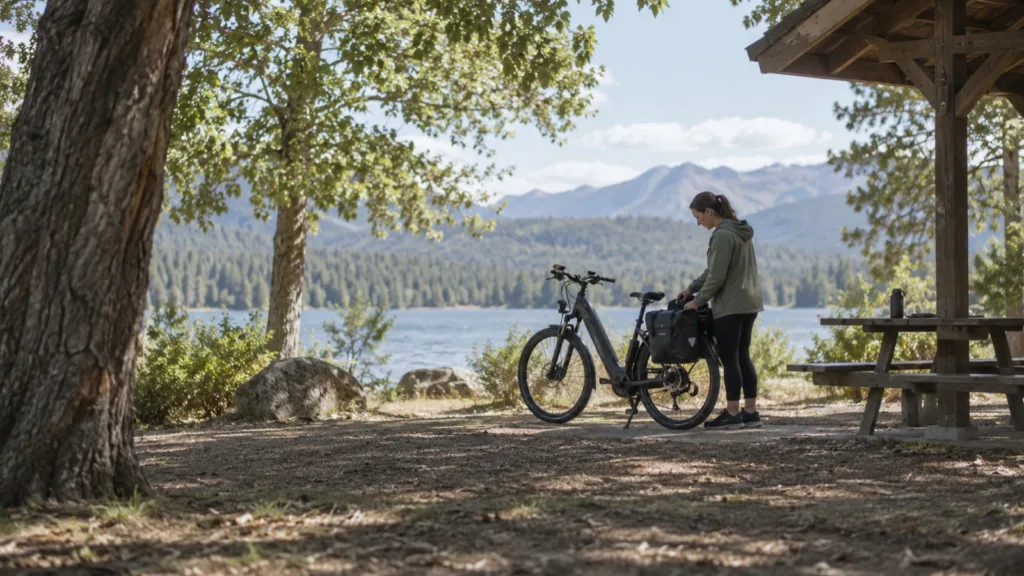


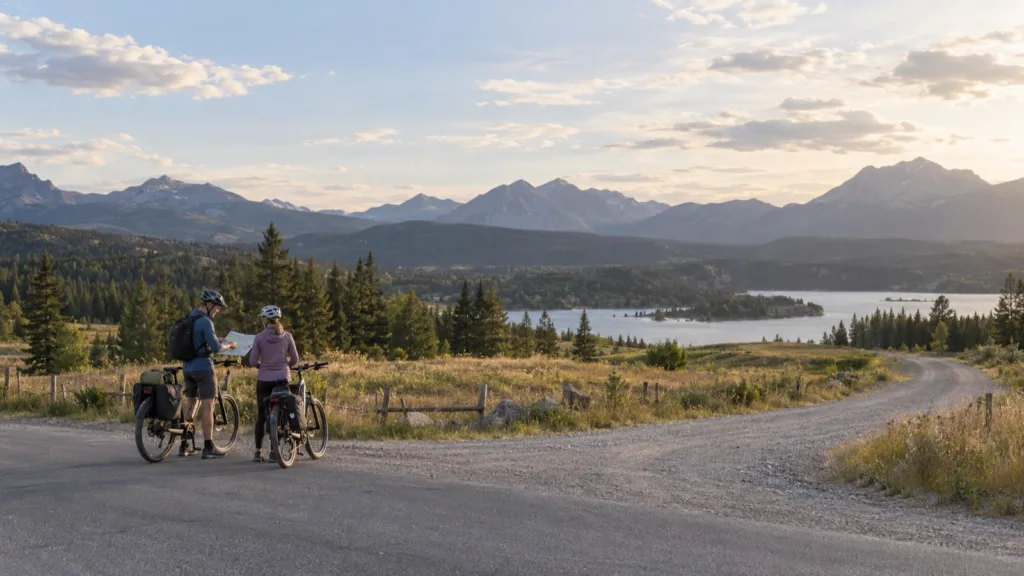
Bikepacking and bicycle touring are overlapping ways to travel with a bicycle. Bikepacking often uses compact bags attached to the bike and may include unpaved routes; touring often uses rack luggage and can center on roads and towns. Neither label guarantees a particular surface, distance or camping style.
For an e-bike, choose the actual route and overnight plan first. Battery support, legal access and luggage fit can matter more than which travel label sounds appealing. A short trip with familiar surfaces is a useful starting point for either style.
Use the labels as questions, not requirements
Cycling UK’s comparison of touring and bikepacking describes differences in luggage and typical riding styles while recognizing overlap. Riders can mix rack bags and smaller bags, sleep in a campground or book indoor accommodation.
You do not have to replace a working pannier setup just to try an overnight route called bikepacking. Nor does a frame bag make a bicycle suitable for every trail. Follow the bicycle’s intended-use limits and check each section of the route.
Compare the decisions that affect your first trip
The following are planning tendencies, not fixed definitions:
| Decision | A compact bikepacking approach | A road-oriented touring approach |
|---|---|---|
| Luggage | Small bags distributed around approved mounting areas | Rack luggage or other compatible carrying systems |
| Packing task | Fit a limited kit into several smaller spaces | Organize the load and confirm rack and bag limits |
| Route research | Check surfaces and access for every path section | Check traffic, road conditions and stops |
| Overnight stay | Camping or accommodation that fits the itinerary | Camping or accommodation that fits the itinerary |
| E-bike charging | Verify facilities instead of assuming them | Verify facilities instead of assuming them |
For example, a paved ride to a campground with panniers can be a sensible first trip. A maintained gravel loop with small bags may also work if the route, bike and loaded handling are suitable. These examples do not imply every fat-tire bike is approved for remote or technical terrain.
Check bag space on the actual e-bike
A battery occupying the main frame triangle may reduce room for a frame bag. Suspension movement, cables and charging access also matter. Measure the usable space before buying and get approval for uncertain mounting arrangements. Do not cover vents or interfere with battery handling to fit another bag.
Panniers need a compatible rack, suitable attachment points and heel clearance. The pannier fit checklist covers that system. A larger bag still does not increase the bike’s load limit.
Test the luggage you already own where the manufacturer permits it. Pack the planned contents, walk the loaded bike and try a short ride. A setup that looks neat while parked can feel awkward during a turn or when you have to get off.
Build the itinerary around support you can verify
Find out where you can obtain water, food, accommodation and assistance. Check access with the relevant land manager or authority, especially where a route includes trails. Use the e-bike trail-access guide to organize those questions.
Ask each overnight stop about an appropriate charging location and permission to use it. A room reservation or campsite booking alone does not confirm battery charging. If there is no charging facility, use the no-charging overnight plan to decide whether the round trip is practical.
Avoid choosing a daily mileage target before you understand those details. Your comparable loaded rides are a better starting point than another rider’s itinerary with a different bike and battery.
Pick the trip you can rehearse
For the first overnight, choose the plan with the fewest unresolved questions. That might mean a road route near towns, a familiar park route where your bike is permitted, or a campground close enough for an easy practice ride.
Write down the route, overnight stop, luggage, charging decision and return arrangement. Then rehearse the loaded ride. If one part feels difficult, change that part before buying a whole new travel setup. The camping checklist helps finish the packing once the itinerary works.