


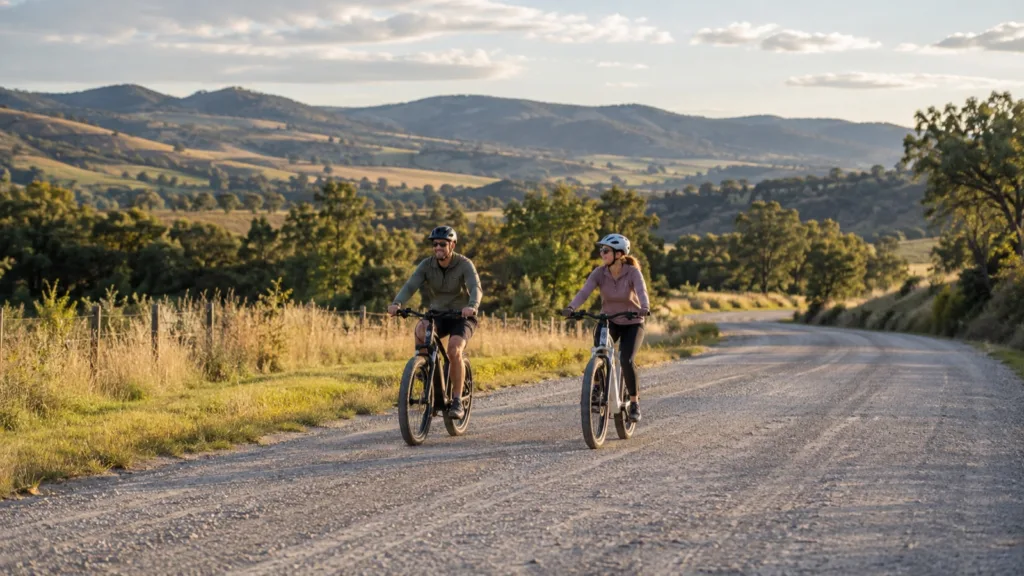
A fat-tire e-bike can be a comfortable option for some gravel roads, but the word “gravel” covers everything from a firm neighborhood path to loose, rutted forest roads. Before choosing a bike, think about the surface you actually ride, how quickly it changes, and whether you can comfortably control the bike when the surface gets rough.
Wide tires do not make every e-bike an off-road bike. The frame, brakes, suspension, tire tread, rider position and the manufacturer’s intended-use guidance all matter. A familiar route is a better starting point than a dramatic trail photo.
Match the bike to the gravel you ride
Firm, maintained crushed-stone paths are different from deep loose gravel, washboard roads or rocky descents. On a firm path, comfort and predictable steering may matter most. On loose or uneven ground, tire tread, pressure, wheel control and the bike’s design become more important. If the route includes technical singletrack, do not assume a fat tire or motor makes a general-purpose e-bike suitable for it.
REI’s guide to choosing a bike for bikepacking describes how terrain changes the demands on tires, suspension and handling. Use that as a way to frame questions, then follow the specifications and intended-use notes for the exact e-bike you are considering.
What to check before riding
Start with the owner’s manual. Confirm that the bike is intended for the surface you plan to use and learn any operating limits. Then inspect the route and bike rather than relying on the tire label alone.
- Look for loose corners, washboard sections, potholes, drainage channels and steep descents.
- Check tire condition and use a pressure within the tire and bicycle makers’ stated limits. Our fat-tire pressure guide explains why there is no universal PSI for every rider and surface.
- Confirm that the brakes feel normal before entering a long descent. If they feel weak, noisy in a new way or inconsistent, stop and have them checked.
- Keep luggage secured and within the published limits for the bicycle and any rack.
- Choose an easy first section where you can get used to steering and braking before the route becomes more demanding.
Ride smoothly on loose surfaces
Reduce speed before a loose turn instead of braking sharply while leaned over. Keep your eyes farther down the path, leave room to stop and avoid sudden steering inputs. If a section looks beyond your ability or the bike’s instructions, walk it or turn around.
Use assistance in a way that keeps the bicycle controllable. A sudden change in power can surprise a new rider on loose ground. Practice starting, stopping and changing assist settings in a safe, open area before taking an unfamiliar route.
After the ride, check for cuts or embedded debris in the tires and listen for new rattles. Wipe off loose dirt using the cleaning method in the manual; do not direct high-pressure water at electrical parts or bearings.
Decide whether a fat-tire e-bike fits your route
Compare the route, not just the tire width. If your rides include a mix of pavement and maintained gravel, ask for a demonstration on a similar surface and pay attention to low-speed steering, braking and comfort. If you mostly ride smooth pavement, our guide to fat-tire e-bikes on pavement covers different tradeoffs.
For a model comparison, check the current product pages for the E100 Pro and E300 Pro, then confirm that the specific bike’s stated use matches your route. A tire style can help describe a bike; it cannot replace fit, setup and route judgment.