

Whether an e-bike is allowed on a bike trail depends on the trail and the agency that manages it. A paved path, a local park trail and a singletrack route on public land can have different rules. Do not rely on a general “e-bikes allowed” statement from a search result when the specific route has its own restrictions.
The most reliable approach is to identify the trail manager and confirm the current rule for the exact e-bike class and route you plan to use.
Start with the trail manager
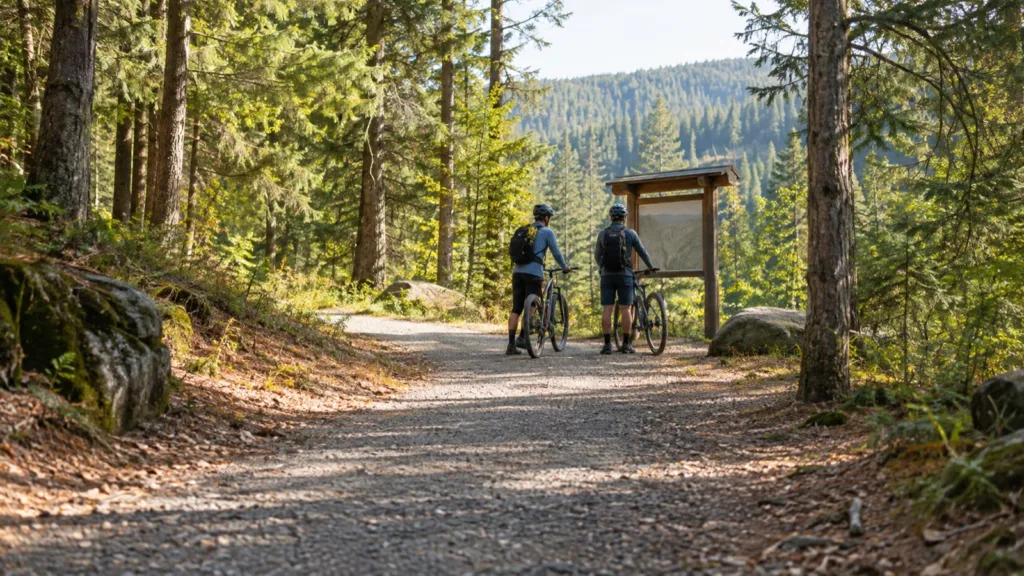
Look for the agency or organization named on the trail’s official page or map. That may be a city, county, state agency, federal land manager, park district or private trail organization. Read the current rules for the individual trail and check for posted signs when you arrive.
PeopleForBikes notes that e-bike access varies across federal, state, county and local trails, and that eMTBs are not permitted everywhere traditional mountain bikes are. Its eMTB access map and guidance are useful starting points, but the site also advises riders to consult the local land manager.
Confirm the bike class and the access category
Trail rules may distinguish among e-bike classes or types. Check your owner’s manual and the product documentation for the exact classification; do not infer it from motor count, tire width or a model name. If the listing is unclear, ask the manufacturer or seller to identify the bike’s legal class in writing.
Then compare that information with the trail’s posted policy. A route open to bicycles may still restrict certain e-bikes. A nearby road or paved path may have separate rules from the natural-surface trail that branches off it.
Ask a specific question
If the website is unclear, contact the trail manager with the route name and bike classification. You can ask: “Is this route open to an e-bike in this class, including the section from [trailhead] to [destination]? Are there seasonal closures or additional requirements?” Save the response and check for updates shortly before the ride.
Avoid relying solely on a crowd-sourced map, old forum post or another rider’s memory. Rules can change when a land manager updates a pilot program or trail policy.
Respect closures and shared use
Once access is confirmed, follow speed limits, yield signs and posted direction rules. Slow down near pedestrians, horses and other cyclists. Stay on designated routes, do not bypass barriers, and turn around if a closure or restriction is posted.
If the route is not open to your bike, look for an official paved path, public road or other designated route where your e-bike is permitted. Choosing a legal alternative protects access for future riders and helps avoid an unnecessary trip.
Before every ride on unfamiliar land, make three checks: the exact trail, the e-bike class and the current manager’s rule. There is no single nationwide answer that safely replaces those checks.