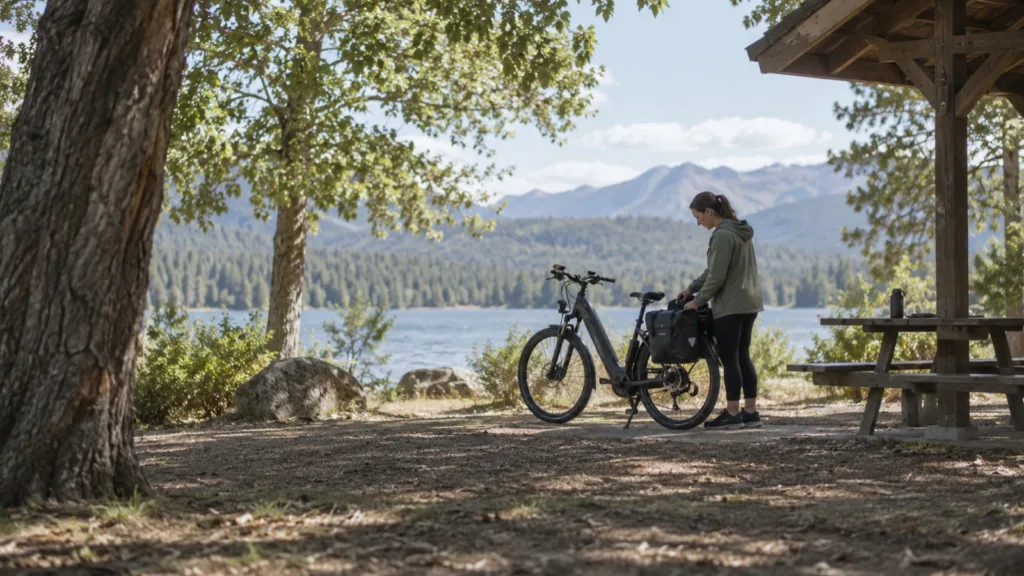



For an e-bike camping trip without charging, plan the entire outbound and return route around the usable charge you start with. Choose a short trip you can support with comparable loaded riding experience, leave a reserve, and have a return option that does not depend on an unconfirmed outlet.
If you cannot establish a comfortable round-trip plan, shorten the route or choose a campsite with a confirmed, appropriate charging arrangement. Carrying a charger does not create a place to use it.
Confirm what "no charging" means
Ask the campground about bicycle access and any electrical facilities before booking. An outlet shown on a map may be unavailable, reserved for another use or unsuitable for the battery’s approved charging procedure. A route with no confirmed charging needs to work without it.
Avoid assuming a portable power bank can charge an e-bike. Charger requirements, source capacity and compatibility need verification from the relevant manufacturers. Do not modify connectors or create an improvised electrical setup to rescue the itinerary.
The general e-bike camping checklist covers equipment and campsite preparation. This guide addresses the more specific decision of whether a short overnight route works when there is no charging stop.
Use a loaded trial ride to set your boundary
Try the bike with the planned bags and approximate load on a familiar route with similar surfaces and climbing. Record distance, assistance use, conditions and the change in indicated charge. Keep the ride within a comfortable return distance; do not intentionally run the battery empty to discover a limit.
Repeat the trial if the proposed trip differs substantially. A light ride on flat pavement is weak evidence for a loaded route with climbing. The range guide explains the variables to keep in your notes.
A displayed percentage or range estimate is a planning aid, not a fixed promise. No universal reserve percentage suits every bike, route and rider. Use conservative limits from the manufacturer’s instructions and your comparable rides, then keep the overnight route comfortably inside them.
Write the itinerary as a round trip
This example is a worksheet, not a claim that a particular battery can cover it:
| Part of the trip | Question to answer before booking |
|---|---|
| Home or trailhead to campground | Is the loaded outbound route familiar and suitable? |
| Riding around the campsite | Will you need charge for extra riding or errands? |
| Campground to the starting point | What climbing, wind or surface changes could affect the return? |
| Optional detour | Can you leave it out if conditions change? |
| Backup transport | Is help actually available for the people and bicycles? |
For a first overnight, a campsite close to a familiar starting point is useful. You can test the ride home with the same luggage before committing to an unfamiliar remote route. Optional sightseeing should remain optional in the plan.
Pack the overnight essentials you can carry
Match shelter, sleep gear, clothing, food and water to the campsite and forecast. Check the carrying system and applicable load limits. A lighter optional item list can simplify packing, but do not omit supplies required for the conditions to save a little battery use.
REI’s bikepacking introduction offers background on self-supported overnight travel. For an e-bike, add the battery manufacturer’s storage and transport requirements to the camping plan. Choose a permitted, secure location that meets those requirements; do not assume the tent is appropriate battery storage.
Bring navigation and a way to communicate that work for the route. If phone service is uncertain, settle the assistance plan beforehand rather than treating a phone number as a guaranteed rescue.
Set a decision point before departure
Choose a place early in the outbound route where you can still return comfortably. Reassess if the weather, surface or load feels different from your trial. A short overnight should allow you to turn back without depending on a full battery discharge.
At camp, keep the next day’s route simple. If the remaining charge or bike condition makes the return uncertain, arrange help before leaving. The battery handling guide covers routine care, but it cannot turn an unverified distance into a reliable plan.