


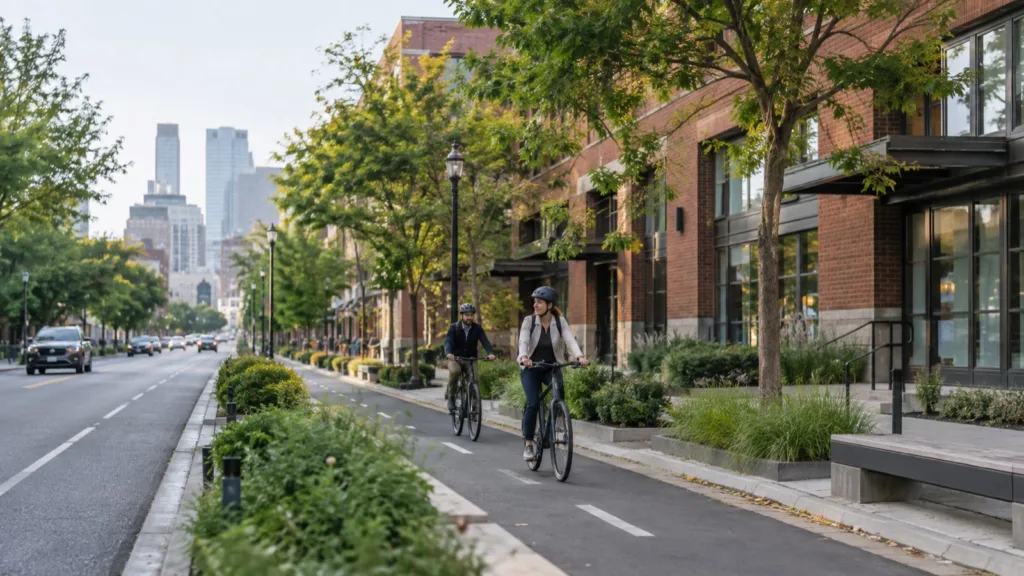
Before your first e-bike commute, work out the route, parking and return trip. A charged battery matters, but so does knowing whether you can bring the bike into your workplace and where you will leave it for the day. A rehearsal ride can reveal those problems before you have a meeting to reach.
Use this checklist for planning a routine, not for buying every accessory at once. Begin with what your route requires, then adjust after a few ordinary workdays.
Ride the whole route once without a deadline
Check a bicycle route rather than accepting your usual driving directions. Look for difficult crossings, fast traffic, surface changes and places where you need to dismount. Confirm that your class of e-bike is permitted on every path you intend to use.
Try the route in advance and include the final approach to the building. A pleasant bike lane is less helpful if the last block ends at a staircase you cannot manage. Record door-to-door time, including locking the bike and changing clothes. A weekend rehearsal will not reproduce weekday traffic, so leave extra time for your first commute.
Plan the return as a separate trip. It may be darker, windier or busier than the morning ride. Decide on a backup route or a way to get home if weather or a mechanical problem stops the ride.
Confirm parking before you arrive
Ask your workplace where bicycles may be stored and whether there are access hours or battery rules. Check the actual parking point rather than relying on a general promise of "bike storage." Take the lock you intend to use and confirm that it reaches the frame and an appropriate fixed anchor. Our e-bike locking guide covers parking choices and locking technique.
Do not plan around workplace charging unless it is permitted and the space meets the charger and battery instructions. A route you can complete with a conservative round-trip reserve gives you more flexibility. Use your own comparable rides to judge that reserve, with help from the range-planning guide.
Pack for the day you actually have
Put work items in the bag you will carry and test the fit on the bike. Check that straps cannot reach the wheels, that your heels clear the bag and that luggage does not hide lights. Keep within the bicycle and rack limits.
- A fitted helmet, suitable lights and weather-appropriate clothing.
- Your lock, keys and any building access card.
- A charged phone and a backup transport plan.
- Water and the work items you need that day.
- Repair supplies you know how to use, or contact details for assistance.
REI’s commuter gear guide discusses everyday clothing, visibility and carrying options. If you are choosing a bag, our pannier vs backpack comparison focuses on that decision without requiring a full commuting setup.
Use the first week to find the friction
After each commute, jot down one thing that cost time or caused discomfort. Perhaps the bag took too long to attach, the chosen crossing felt difficult or you needed an extra layer for the return. Fix that specific issue before adding more equipment.
You can begin with one or two commuting days while you learn the routine. There is no need to commit to every day before you know how the route fits your schedule. Check tires and brakes before departure, keep your battery routine consistent and allow enough time that arriving late does not tempt you to hurry through a difficult section.