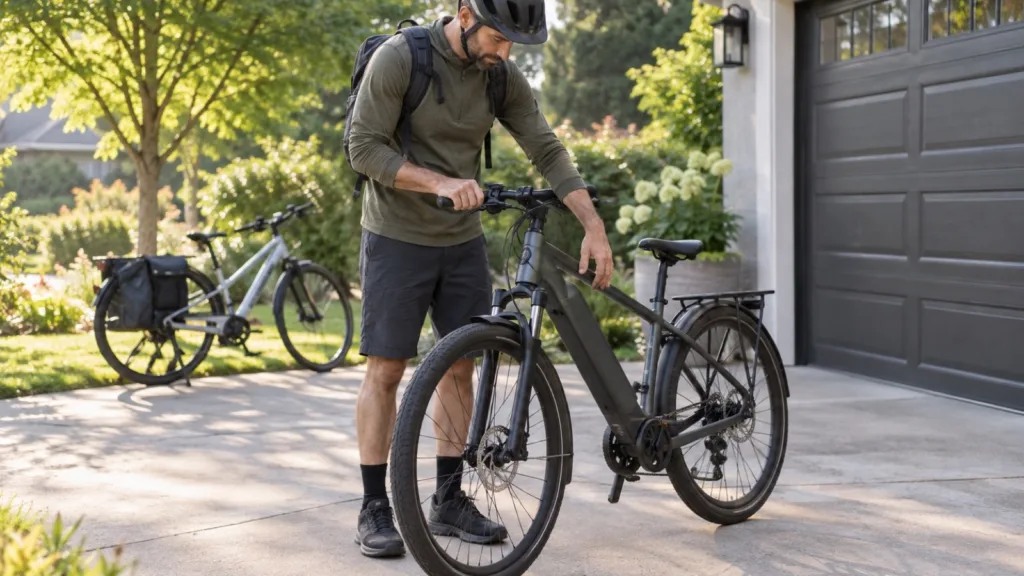



A flat tire can interrupt an e-bike ride, but the safest next step depends on the wheel, motor layout and instructions for your exact bike. Move away from traffic before inspecting anything. If you are not sure how to remove a wheel or disconnect its electrical cable, arrange a pickup or ask a bike shop for help.
This guide focuses on roadside decisions and preparation. It does not replace your owner’s manual or a model-specific repair procedure.
Get to a safe place first
Stop pedaling and move the bicycle off the road or path if you can do so safely. Turn the electrical system off. Do not continue riding on a flat tire; doing so can damage the tire or rim and make the bike harder to control.
Look for the cause only when you are well clear of traffic. Check the tire’s outside for a visible object, cut or pinch damage. Avoid pulling out an embedded object until you are ready to repair or replace the tube, because it may be slowing the leak.
Decide whether you can repair it
Some e-bike wheels are straightforward to remove, while hub-motor wheels can involve axle hardware, wiring and additional steps. Park Tool’s e-bike tool guide specifically notes that wheel removal can be more complicated on hub-drive bikes.
Before attempting a repair, check the manual for wheel removal and electrical connector instructions. If the manual does not cover the repair, you lack the right tools, or the bike is heavy and unstable to support, do not improvise roadside. Call for assistance or walk the bike only if it can be controlled safely.
If you already know how to fix a tube on that wheel, carry the correct tube or patch kit and tire levers. Confirm the replacement size and valve type from the tire or manual before the ride. A generic tube that does not match the wheel is not a useful backup.
Prevent the next interruption
Check tire pressure using the range stated by the tire and bicycle makers. Our fat-tire pressure guide explains why pressure should not be copied from another bike or surface. Inspect the tread and sidewalls for cuts, embedded debris or visible damage before longer rides.
For regular routes, keep a small repair plan: the right tube or patch kit, a compatible pump, tire levers if needed, and a way to contact someone. Practice a repair at home before relying on it away from traffic.
Know when to call a shop
Ask a qualified shop for help if the tire or rim is damaged, the wheel does not seat correctly, a motor cable is involved, or the repair does not restore normal handling. After a repair, spin the wheel, check that the brake works, and take a short, slow test ride in a safe area.
A flat is frustrating, but there is no need to turn it into a roadside emergency. Prioritize a safe location, follow the bike-specific instructions and get help when wheel removal is outside your experience.